1. How is peptide purity achieved and verified?
Purification reduces unwanted components, while analysis assesses the resulting material. We recommend checking method, result and batch identifier. A “high purity” claim without documentation does not establish what was actually measured.
2. HPLC and mass spectrometry
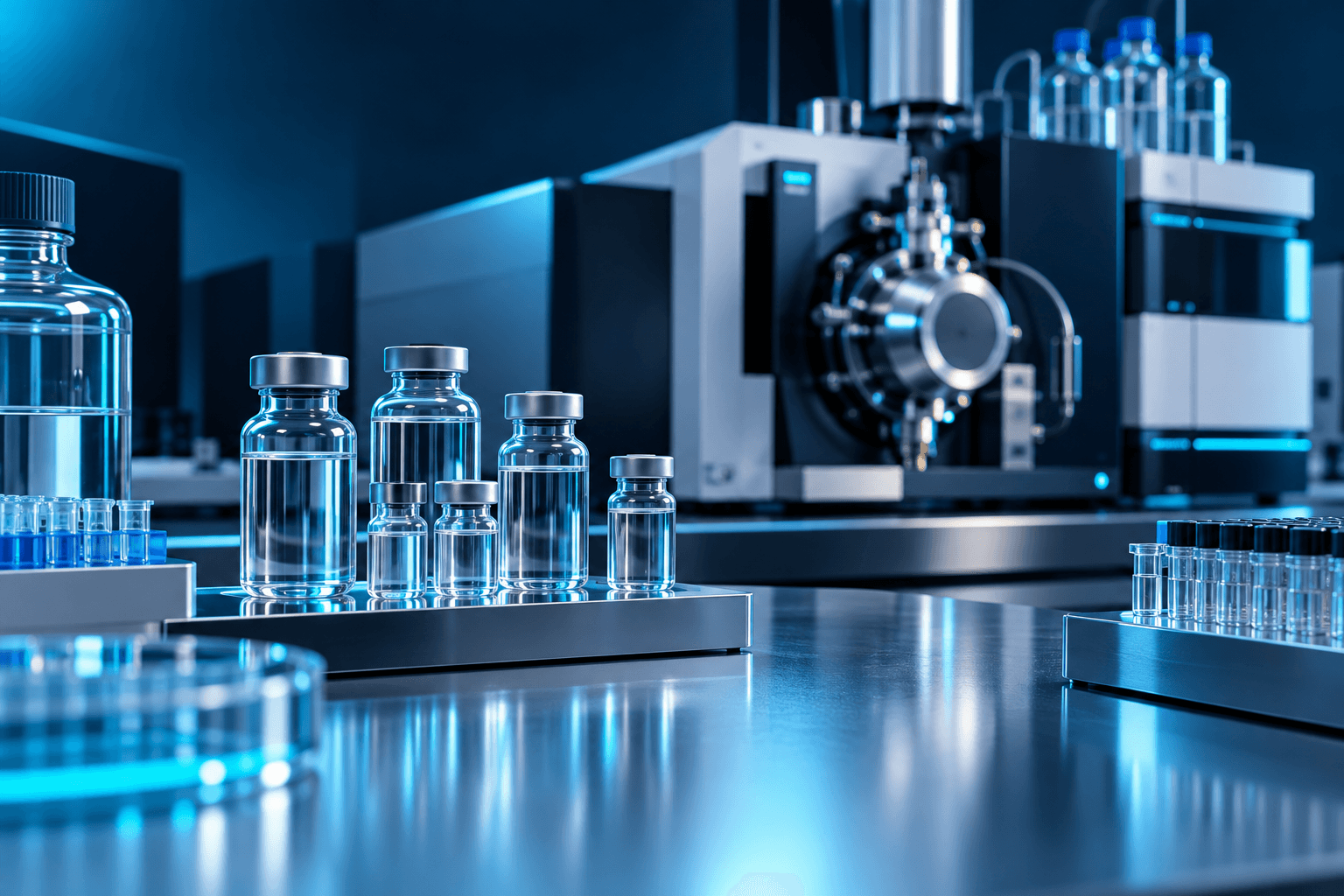
HPLC can estimate purity from detected peak areas. Mass spectrometry provides information to characterise molecular identity. These are complementary techniques: chromatographic percentage is not equivalent to net peptide content and does not alone describe every impurity.
3. What peptide purity level is recommended?
No universal range suits every assay. Supplier tables offer different recommendations. The percentages below are illustrative references, not a Brazilian standard or a validated catalogue classification. Define the specification with the person responsible for the study.
4. High purity (>95%)
Suppliers list this range for certain quantitative and structural studies. We still recommend checking identity, method and relevant impurities. A value above 95% does not establish sterility, clinical safety or authorisation for human use.
5. Intermediate purity (>85%)
The 85% threshold is not a universal recommendation. Technical supplier tables may use other intervals. We recommend evaluating impurity effects and justifying the specification rather than choosing solely by cost.
6. Lower purity (>70%)
“Above 70%” also includes higher values; it does not define an exclusive range. Some exploratory applications use lower specifications, but suitability depends on the assay. We recommend declaring minimum, measured value and method instead of assuming batch equivalence.
Educational content. It does not replace professional guidance, provide use protocols or establish regulatory authorisation for products.