1. What are the differences?
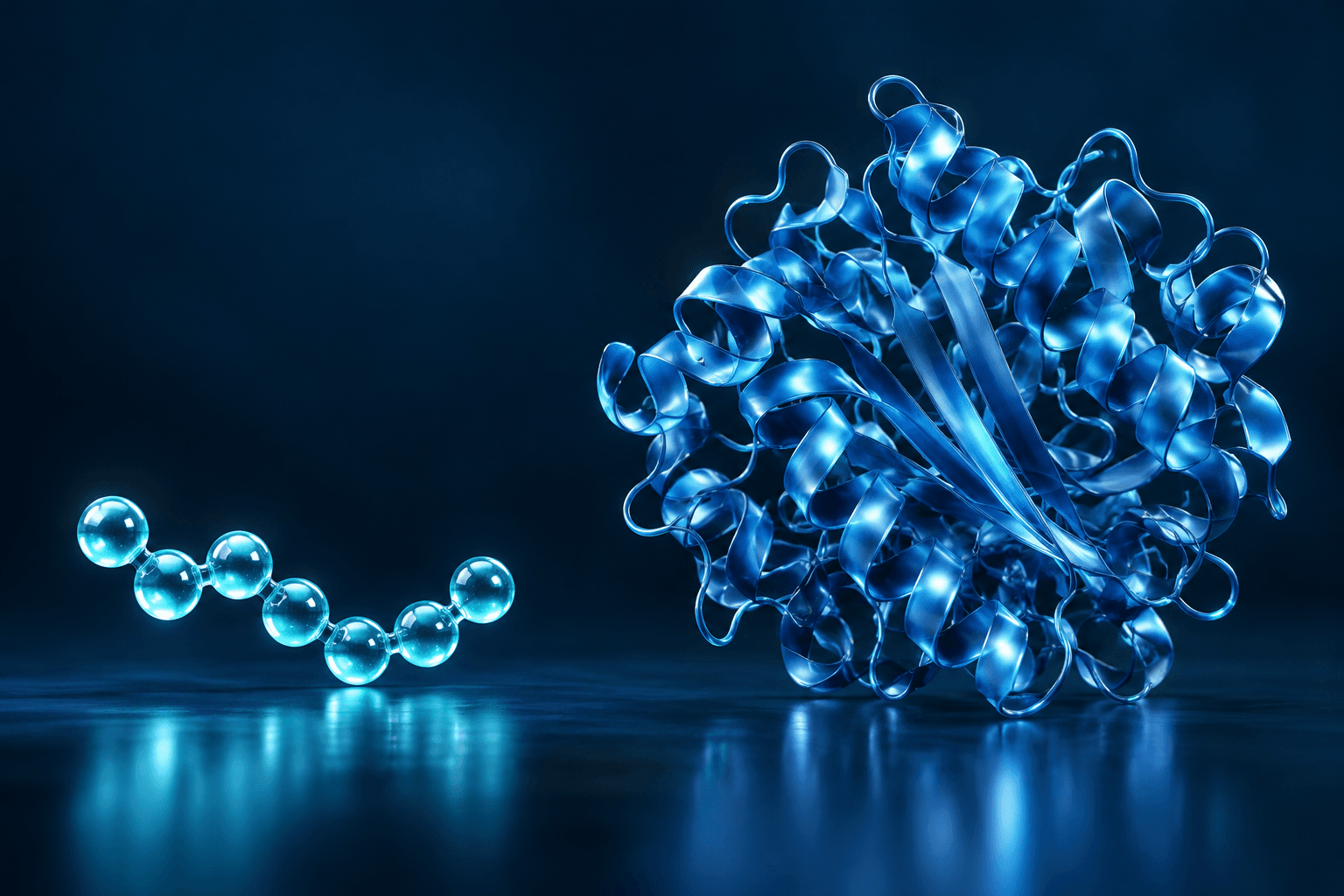
Peptides and proteins share amino-acid chains. Peptides are generally smaller and proteins larger, but the boundary varies by convention. Compare molecules through sequence, modifications and structure as well as size.
2. Amino acids
Amino acids are chemical units with amino and carboxyl groups; their side chains distinguish their properties. Once incorporated into a peptide chain, they are described as residues. This vocabulary helps readers interpret sequences and technical sheets.
3. Peptides
The term describes amino-acid units joined by peptide bonds. A useful technical description goes beyond a name to specify composition or sequence. We recommend confirming the stated identity in batch documentation without inferring benefit from this classification.
4. Polypeptides and proteins
A polypeptide is a chain with many residues. Proteins may contain one or more chains organised into three-dimensional structures. These related terms are not interchangeable in every context; consult the definition used by the source.
5. Peptide versus protein: which term should you use?
Use the recognised nomenclature for the molecule and specify the convention when needed. IUPAC notes that its protein-definition boundary is imprecise. Avoid presenting “50 amino acids” as a universal rule or treating terminology as a quality guarantee.
Educational content. It does not replace professional guidance, provide use protocols or establish regulatory authorisation for products.